A working timeline of modern football
By Marco Pereira · Jul 15, 2026
You do not need to memorise dates. You need a handful of anchors, and everything else slots between them.
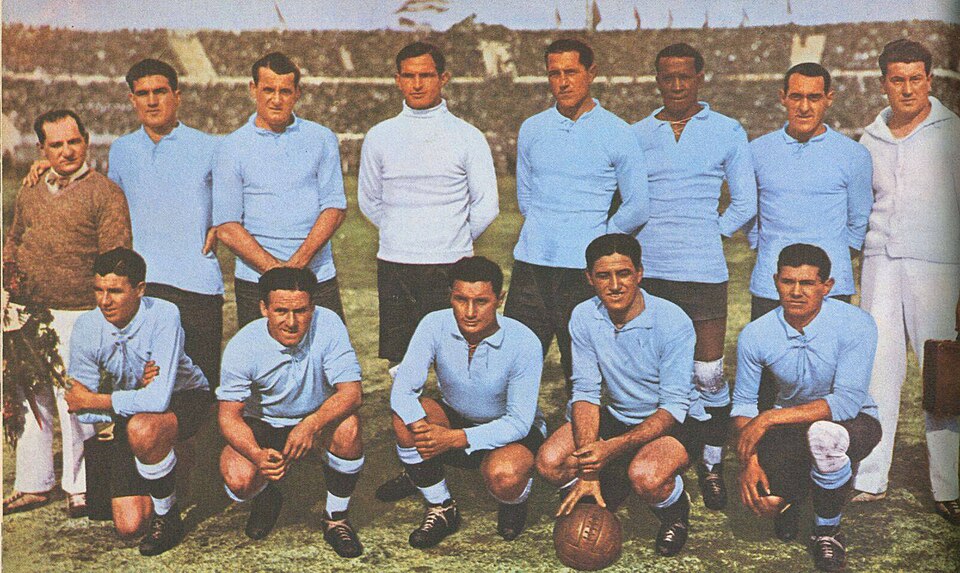

Putting football moments in order is much easier with a few reliable anchors than with a long list of memorised years. If you know roughly when the major competitions started, when the money arrived and when the big rule changes landed, you can date almost any famous moment to within a few years by reasoning about what the game looked like around it.
What follows is a compact framework: five eras, each with the dates that hold it together.
Foundations, from the late 1800s to 1930
The laws of the game were codified in England in the 1860s, and the first international match was played between Scotland and England in 1872. Professionalism, league competition and national associations spread across Europe and South America over the decades that followed.
The anchor here is 1930, when the first World Cup was staged in Uruguay and the hosts won it. Anything involving an international tournament comes after 1930. Anything involving European club competition comes a good deal later.
European expansion, 1955 to 1970
The European Cup began in the 1955-56 season and Real Madrid won the first five editions. This is when club football became properly continental, and it hands you a hard boundary: no European club silverware predates the mid-1950s.
The Ballon d'Or was first awarded in 1956, substitutes were permitted in competitive football during the 1960s, and England won the World Cup in 1966. Between them those dates cover a period that is otherwise easy to compress in memory.
Total Football and the tactical turn, the 1970s
The Netherlands sides built around Johan Cruyff, and the Ajax teams coached by Rinus Michels, changed how football was played and how people talked about it. Ajax won three straight European Cups from 1971 to 1973. The Netherlands reached the World Cup finals of 1974 and 1978 and lost both.
This decade anchors anything described as a tactical revolution. Worth holding on to: Total Football belongs to the 1970s, while the possession football it influenced belongs to the 2000s. Thirty years apart, and a common ordering mistake.
The commercial break point, 1992 to 1995
Three changes inside four years reshaped the modern game. In 1992 the Premier League was founded and the European Cup was restructured and rebranded as the Champions League, both driven by television money. That same year the back-pass rule arrived, forbidding goalkeepers from handling a deliberate pass from a team-mate, which permanently altered how teams build play from the back.
Then in 1995 the Bosman ruling let out-of-contract players in the European Union move without a fee and struck down limits on EU players per club side. If a moment involves enormous television revenue, freedom of movement, or a goalkeeper who looks comfortable with the ball at his feet, it sits after this window. It is the most useful boundary in football history.
The modern era, 2000 onward
Transfer records climbed steeply through the 2000s. Luís Figo in 2000 and Zinedine Zidane in 2001 both moved to Real Madrid and set the tone, and Cristiano Ronaldo's 2009 move from Manchester United to Real Madrid set a new record. Barcelona's possession-dominant sides under Pep Guardiola won the Champions League in 2009 and 2011.
Fees jumped again in 2017, when Neymar joined Paris Saint-Germain for a reported 222 million euros, more than double the previous record, with Kylian Mbappé following a year later. On the rules side, goal-line technology arrived at the 2014 World Cup and the video assistant referee was used at a World Cup for the first time in 2018.
Using the anchors
To date an unfamiliar moment, work out which side of 1992 it falls on first. The commercial and tactical character of the game either side of that line is very different. Then narrow by competition: European club silverware puts it after 1955, a World Cup after 1930, a Champions League final after 1992.
Visual detail helps as well. Advertising density, kit design, pitch condition, the presence of a running track and the physical size of the players all shifted noticeably decade by decade. When you are ordering several events at once, place the ones you are most confident about at the extremes first, then fit the uncertain ones between fixed points instead of trying to date each one on its own.
Key takeaways
- 1930 first World Cup, 1955-56 first European Cup, 1966 England's World Cup win.
- 1992 is the great dividing line: Premier League, Champions League and the back-pass rule.
- 1995 Bosman created free agency and reshaped the transfer market.
- Order events by fixing the extremes first, then filling the middle.
More football guides
- How football transfer fees actually work
- What makes a footballer expensive
- How to identify a football stadium from a single view
- Ten football stadiums worth knowing on sight
- Six rule changes that reshaped football
- Passing triangles and the logic of positional play
- How to get better at football quizzes
- How top-ten lists work in football
- Why some passing moves have exactly one solution
- What makes a good football trivia question