Six rule changes that reshaped football
By Marco Pereira · Jul 8, 2026
Tactics get the credit, but several of football's biggest shifts began as a line of text in the laws of the game.

Football's laws change rarely and cautiously, which makes the changes that do land unusually consequential. A fair amount of what gets described as tactical evolution started as a regulatory decision that made the old approach unworkable.
These six are the ones whose effects you can still see in every match played today.
The back-pass rule, 1992
Before 1992 a defender under pressure could roll the ball to his goalkeeper, who would pick it up. The 1990 World Cup was widely panned as defensive and low-scoring, and the response was to forbid goalkeepers from handling a ball deliberately kicked to them by a team-mate.
The effect was enormous and permanent. Goalkeepers had to become footballers. Defenders lost their safety valve. Pressing suddenly paid, because forcing a mistake near the opposition goal became possible. Almost everything modern about building play from the back traces back to this one line.
Three points for a win
Introduced in England in 1981 and adopted internationally over the following decade, including at the World Cup from 1994, awarding three points rather than two changed the arithmetic of a draw. A team that would once have protected a point now had a reason to chase a winner.
The effect on any single match is small. Across a season it changes how sides manage the closing stages, and it is why attacking substitutions late in games became routine.
Offside reinterpreted in the attacker's favour
The offside law itself is old, but the way it is read has been loosened repeatedly. A 1990 revision made a player level with the second-to-last defender onside rather than offside, and later guidance narrowed what counts as interfering with play.
Those adjustments made the high defensive line riskier and made runs in behind more productive, which fed the stretched, transition-heavy football that dominates the modern game.
The professional foul and the red card
Making it a sending-off offence to deny an obvious goalscoring opportunity, enforced from 1990, took away the cynical calculation that a foul was always worth conceding. Stricter enforcement against the tackle from behind, brought in around the 1994 and 1998 World Cups, cut the physical latitude defenders had enjoyed for decades.
Technical, quick, low-centre-of-gravity attackers gained the most, and the balance of the sport tilted toward them.
Goal-line technology, 2012 onward
Approved in 2012 and used at the 2014 World Cup, goal-line technology answered a narrow factual question automatically and without delay. It caused almost no argument, because the question it settles is binary and human officials genuinely could not always see it.
That smooth adoption made the case for extending technology further, which led straight to the far more contested change that followed.
The video assistant referee, 2018 onward
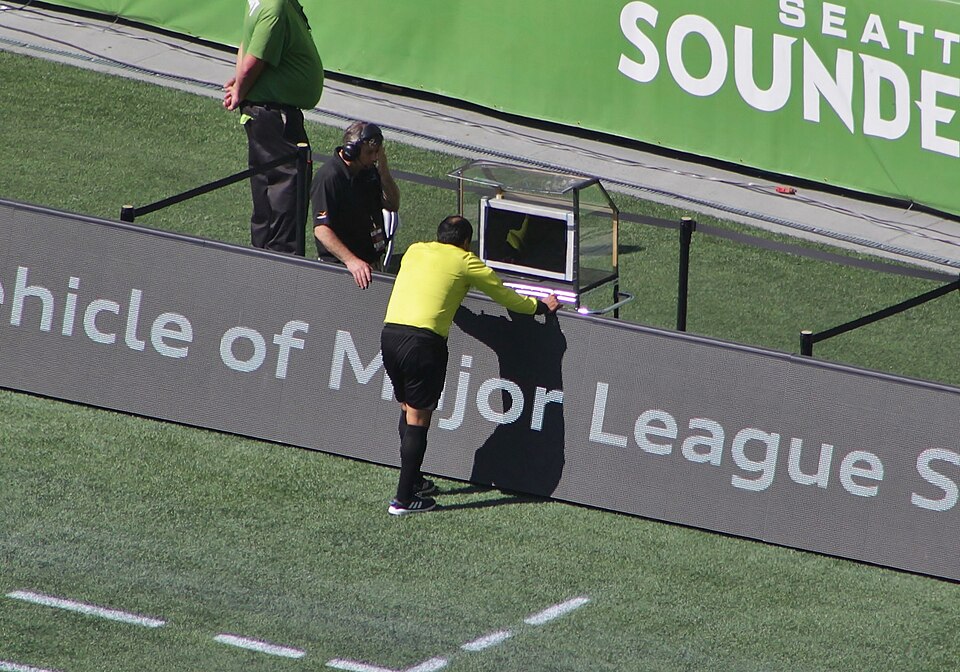
VAR was used at a World Cup for the first time in 2018 and has since been taken up across most major competitions. Unlike goal-line technology it rules on subjective decisions, which is why it has produced sustained argument rather than quiet acceptance.
Its measurable effects include more penalties awarded, more goals ruled out for marginal offside, and longer effective playing time as stoppages get accounted for. Its cultural effect, the pause between a goal and the freedom to celebrate it, may turn out to be the more lasting one.
Key takeaways
- The 1992 back-pass rule created the modern ball-playing goalkeeper and made pressing viable.
- Three points for a win reshaped how teams manage the closing stages of matches.
- Offside and foul reinterpretations shifted the balance toward attackers.
- Goal-line technology settled facts; VAR rules on judgement, which is why it stays contested.
More football guides
- How football transfer fees actually work
- What makes a footballer expensive
- How to identify a football stadium from a single view
- Ten football stadiums worth knowing on sight
- A working timeline of modern football
- Passing triangles and the logic of positional play
- How to get better at football quizzes
- How top-ten lists work in football
- Why some passing moves have exactly one solution
- What makes a good football trivia question