Ten football stadiums worth knowing on sight
By Marco Pereira · Jul 22, 2026
A working shortlist of grounds whose architecture gives them away instantly, and the detail to look for in each.

Some stadiums are recognisable because they are famous. Others are recognisable because they are odd. The ones worth learning properly are both, and every ground below has at least one feature that no other stadium in the world shares.
Ten grounds learned well will do more for you than a hundred half-remembered, because each one also teaches a category of clue you can use elsewhere.
Grounds defined by their vertical scale
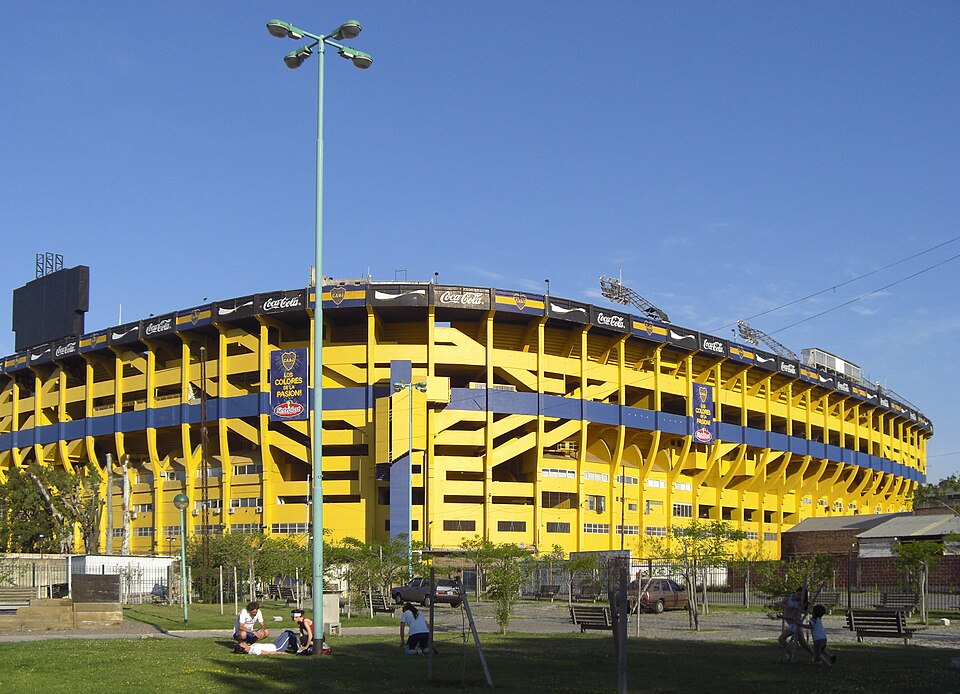
- La Bombonera, Buenos Aires
- Home of Boca Juniors, and unmistakable. Three impossibly steep tiers on three sides, and a flat vertical wall on the fourth where the site simply ran out of room. Nothing else has that lopsided profile.
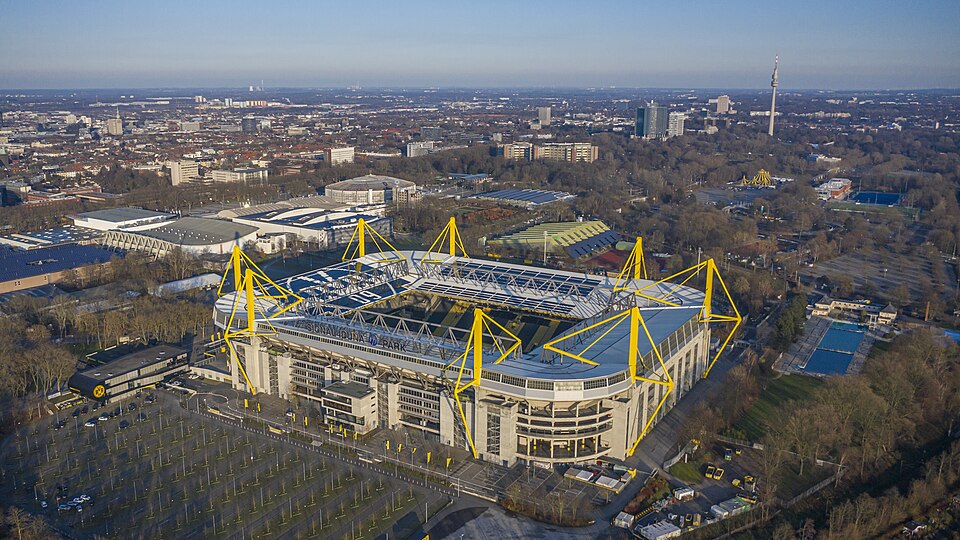
- Signal Iduna Park, Dortmund
- The Südtribüne is the largest standing terrace in European football, one vast yellow bank behind a goal that dwarfs everything around it. Yellow seating plus one enormous terrace points at one club.
- Camp Nou, Barcelona
- Historically the largest ground in Europe, a huge open bowl of steeply raked tiers. Scale alone cuts the list to a handful.

Grounds defined by their skin and roof
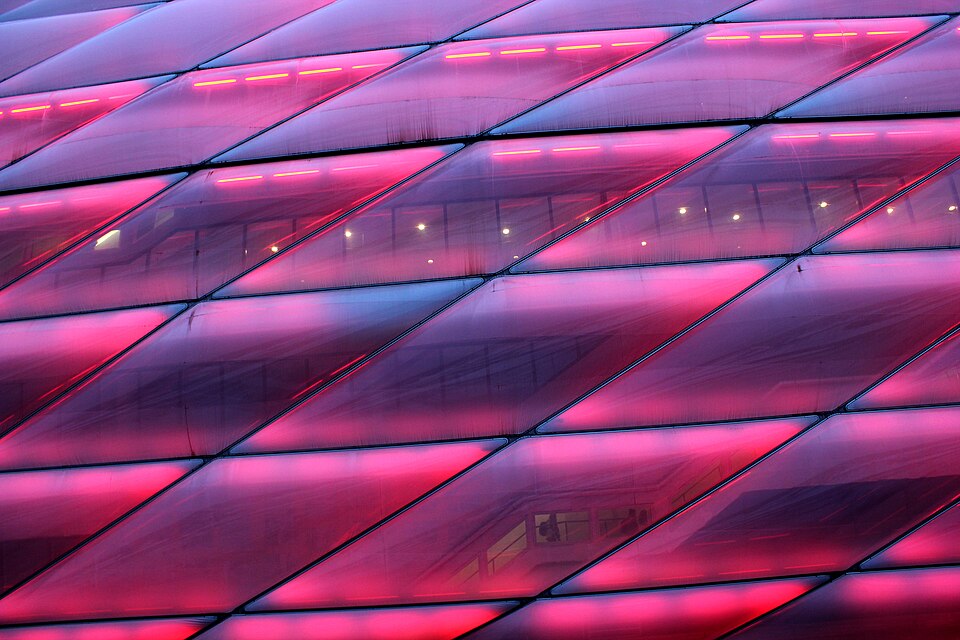
- Allianz Arena, Munich
- Clad in inflated translucent panels that light up in a single colour. From inside, the diamond-quilted facade and the perfectly even bowl give it away at once.
- Wembley Stadium, London
- The 133-metre lattice arch is visible from far outside the ground and from most seats inside it. Nothing else in football looks remotely like it.
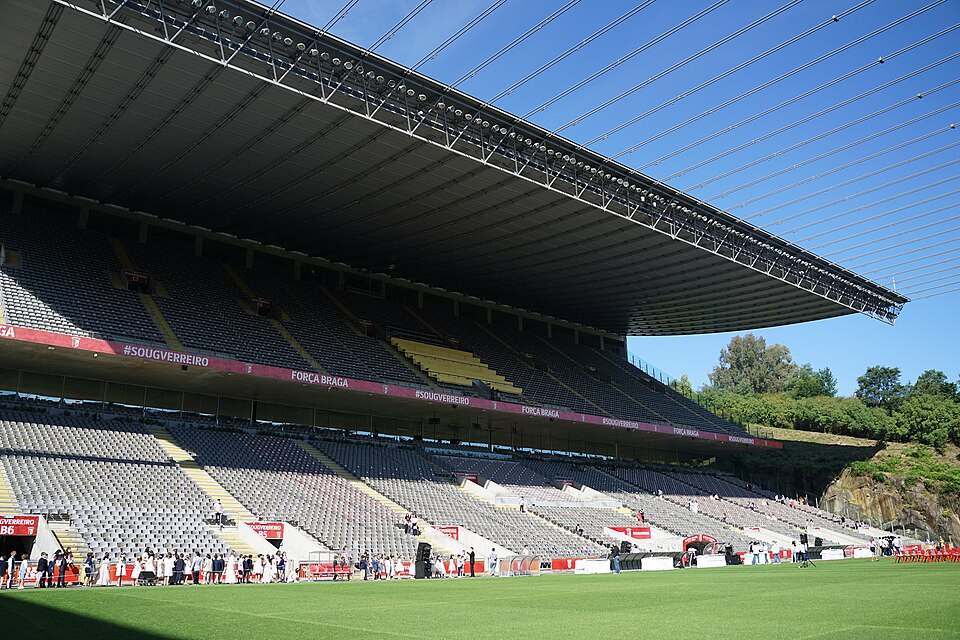
- Estádio Municipal de Braga
- Cut into a quarry face, with stands on only two sides, bare rock behind one end, and exposed steel cables strung across the roof. Probably the most identifiable stadium anywhere.
.jpg)
Grounds defined by their setting
Where a ground sits often matters as much as how it is built. Stadiums on hillsides tend to expose their landscape through open ends, and when you can see terrain rather than city through a gap in the stands, the location is usually the answer in itself.
- Estádio Municipal de Braga
- Worth naming twice. The quarry face behind one end is landscape and architecture at the same time, and no photograph of it is ambiguous.
- Stadio Diego Armando Maradona, Naples
- A large elliptical bowl with a running track and a distinctive open upper ring, set against the hills of the city.
- Anfield, Liverpool
- Four stands of visibly different eras on a tight residential site, red seating throughout, and the Kop as one steep bank behind a goal.
.jpg)
Grounds defined by their seats
- Celtic Park, Glasgow
- Green seating with white lettering picked out across the stands, and a big single-tier north stand. That colour combination is rare enough to be close to conclusive.
- Estadio Santiago Bernabéu, Madrid
- Very steep tiers rising almost vertically and sitting close to the pitch, with a compact footprint for the capacity. That is what happens when you build upward on a constrained city block.
Key takeaways
- One unique feature, an arch or a quarry wall or a flat side, identifies a ground faster than general familiarity.
- Steepness and closeness to the pitch reflect the site constraints of the city around the stadium.
- Learning ten grounds thoroughly teaches transferable categories of clue.
More football guides
- How football transfer fees actually work
- What makes a footballer expensive
- How to identify a football stadium from a single view
- A working timeline of modern football
- Six rule changes that reshaped football
- Passing triangles and the logic of positional play
- How to get better at football quizzes
- How top-ten lists work in football
- Why some passing moves have exactly one solution
- What makes a good football trivia question