How clubs get paid for training young players
By Marco Pereira · Oct 24, 2026
Why a club that trained a teenager can be owed money when he leaves, how FIFA turns years of coaching into a number, and the court case that shaped the rule.
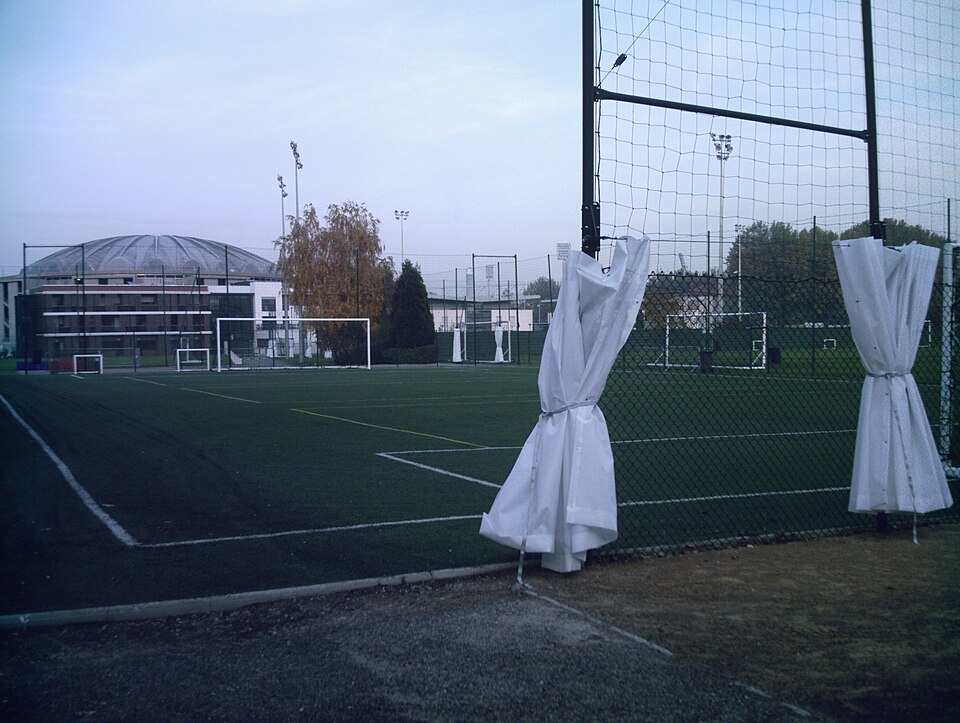

In 1997 a young Frenchman named Olivier Bernard signed a trainee contract with Olympique Lyonnais. When it was close to ending, Lyon offered him a one-year professional deal. He turned it down and signed for Newcastle United. Lyon went to court and asked for 53,357.16 euros, which the Court of Justice of the European Union says was the salary he would have earned over that year.
That case is a good way into a question PriceTag players run into without noticing: why does a club get paid for a teenager who never played a first-team game for it? The answer is training compensation, a payment written into FIFA's transfer rules, and it explains why a fee for a young player is rarely just about talent.
What training compensation is
FIFA's Regulations on the Status and Transfer of Players say training compensation goes to a player's training clubs in two situations: when he is registered as a professional for the first time, and each time a professional is transferred until the end of the calendar year of his 23rd birthday. The regulations add that the duty applies whether the move happens during or at the end of his contract.
That second point is what separates it from a normal transfer fee. A fee is the price a selling club asks while a contract is running. Training compensation is owed even when a contract has run out, so it is a different payment from the transfer fees the Bosman ruling ended for out-of-contract players inside the European Union. The money repays development.
Annexe 4 of the regulations sets out the detail. It applies to a move between clubs of two different associations, so this guide covers international moves and leaves domestic ones to national rules. The regulations also state that the principles of training compensation do not apply to women's football.

When nothing is owed
Annexe 4 lists three cases in which training compensation is not due. The first is when the former club ends the player's contract without just cause, which stops a club releasing a teenager and then billing whoever signs him. The second is when the player moves to a club in category 4, the lowest training category. The third is when a professional gets amateur status back as part of the move.
A fourth rule applies inside the EU and the European Economic Area. If the former club does not offer the player a contract, no compensation is payable unless the club can justify its claim. The offer has to be made in writing at least 60 days before his current contract expires, and it has to be worth at least as much as the current one. A club that lets a youngster's contract run down without a real offer cannot expect a cheque when he leaves.
How the amount is built
The regulations calculate compensation from the costs the new club would have faced if it had trained the player itself. For a first professional registration, that is the new club's yearly training cost multiplied by the number of years of training, normally counted from the calendar year of the player's 12th birthday to the calendar year of his 21st. After that, the sum is based on the years he spent with the former club.
The yearly cost depends on a club's category. Associations sort their clubs into up to four categories according to how much they invest in training players, and FIFA publishes a cost for each category per confederation. For 2026 the UEFA figures are 90,000 euros for category 1, 60,000 for category 2, 30,000 for category 3 and 10,000 for category 4. The regulations say these figures are the cost of training one player for a year multiplied by an average ratio of how many players must be trained to produce one professional.
That ratio matters. A club does not only pay for the one boy who made it. It pays a share of the cost of the many who did not, which is the same idea the Court of Justice relied on in the Bernard case, described below.
One protection keeps the number from running away. For the calendar years of a player's 12th to 15th birthdays, four years in all, the cost is always taken at the category 4 rate, so a very young player is not priced at elite academy rates.
- Source: FIFA: Regulations on the Status and Transfer of Players, June 2024 edition
- Source: FIFA: Training costs and categorisation of clubs as of 2026
A worked example
Take a player trained at a UEFA club from the year he turns 12 to the year he turns 21, and registered as a professional by a category 1 club. That is ten calendar years. The first four, ages 12 to 15, are priced at the category 4 rate: 4 x 10,000 = 40,000 euros. The remaining six, ages 16 to 21, are priced at the category 1 rate: 6 x 90,000 = 540,000 euros. The total is 580,000 euros.
This is an illustration built from the published rules. Real cases vary: the player may have moved between several clubs, and the regulations split the payment pro rata across every club that trained him from the calendar year of his 12th birthday. The new club must pay within 30 days of registration.
Moves between EU and EEA clubs have their own rule for the cost figure. If the player goes from a lower category club to a higher one, the calculation uses the average of the two clubs' costs. If he goes from a higher category to a lower one, it uses the lower club's cost. A Spanish club in category 1 signing from a Portuguese club in category 3 would therefore use the average of 90,000 and 30,000, which is 60,000 euros a year, as the rate for that comparison. FIFA's table lets England, France, Germany, Italy, Spain, Belgium and the Netherlands use all four categories, while Portugal and Scotland start at category 2.
- Source: FIFA: Regulations on the Status and Transfer of Players, June 2024 edition
- Source: FIFA: Training costs and categorisation of clubs as of 2026
Why a court cared
Back to Bernard. The Court of Justice ruled on 16 March 2010. It said that a French rule forcing a trainee to sign his first professional contract with his training club, or face a damages claim, discouraged free movement and was a restriction on it.
The Court did not stop there. As it had held in Bosman, it accepted that encouraging clubs to recruit and train young players is a legitimate aim, and said that the prospect of receiving training fees is likely to encourage clubs to look for talent. A scheme that pays the training club when a young player signs elsewhere in the EU can be justified, as long as it is suitable for that aim and goes no further than necessary.
The French arrangement failed because the money was damages. In the Court's words, the amount was unrelated to the real training costs and was calculated on the club's total loss. A lawful scheme has to take account of the cost of training both future professionals and those who will never play professionally. That is close to how Annexe 4 now builds its figures.
One caution on reading the ruling. The press summary describes a French trainee contract and says nothing about the FIFA formula itself, so read it as the principle the Court applied.
- Source: Court of Justice of the EU: press release 30/10, Olympique Lyonnais v Bernard and Newcastle United
- Source: FIFA: Regulations on the Status and Transfer of Players, June 2024 edition
Do not confuse it with solidarity
A second payment sits next to training compensation. When a professional moves during the course of a contract, 5 per cent of the compensation paid for the transfer, not counting any training compensation, is deducted and shared as a solidarity contribution among the clubs that trained him between the calendar years of his 12th and 23rd birthdays.
The shares are fixed by age. Each of the years from the 12th to the 15th birthday earns the training club 5 per cent of that 5 per cent. Each year from the 16th to the 23rd earns 10 per cent of it.
As an illustration, suppose a player moves mid-contract for 20 million euros. The solidarity pool is 1 million euros. A club that had him for the calendar years of his 16th, 17th and 18th birthdays would receive 3 x 10 per cent of that million, or 300,000 euros. The new club pays it within 30 days of registration. The figures are invented to show the arithmetic, and a real case follows the player's passport history.
What to take from it when you guess a fee
When a young player moves for a headline fee, the number has more in it than his talent. A buyer may also owe training compensation to the clubs that raised him, and for a mid-contract move solidarity money is deducted from the fee itself and passed to those clubs. The seller keeps less than the headline when earlier clubs have a claim.
So when you size up a young player in PriceTag, look at how many clubs he has passed through and how old he was when he left each. Contract length still matters most, as the Bosman ruling made clear, but for a player under 23 these rules add a second layer of payments around the headline number.
- Source: FIFA: Regulations on the Status and Transfer of Players, June 2024 edition
- Source: FIFA: Training costs and categorisation of clubs as of 2026
Key takeaways
- Training compensation is owed to a player's training clubs when he first turns professional and on each transfer until the end of the calendar year of his 23rd birthday, even if his contract has run out.
- The amount is the new club's yearly training cost times the years of training, normally from age 12 to 21, with ages 12 to 15 always at the category 4 rate.
- For 2026 UEFA's yearly costs are 90,000, 60,000, 30,000 and 10,000 euros for categories 1 to 4.
- The Court of Justice accepted in the Bernard case that training clubs can be compensated, but only in line with real training costs.
- Solidarity is a separate payment: 5 per cent of a mid-contract transfer fee, shared among the clubs that trained the player from 12 to 23.
More football guides
- The Bosman ruling and transfer fees
- How football transfer fees actually work
- What makes a footballer expensive
- How to identify a football stadium from a single view
- Ten football stadiums worth knowing on sight
- A working timeline of modern football
- Six rule changes that reshaped football
- Passing triangles and the logic of positional play
- How to get better at football quizzes
- How top-ten lists work in football
- Why some passing moves have exactly one solution
- What makes a good football trivia question